









I remember the first time I walked into a classroom of 30 kids with nothing but a lesson plan printed the night before and the vague hope that things would go smoothly. They didn’t. By the third period, two kids were arguing over a pencil, one had somehow lost a shoe, and I’d lost my place in the lesson three times.
That chaos wasn’t unique to me. Ask any teacher who manages a full classroom — 30 students is the number where everything either clicks beautifully or unravels fast. And that’s exactly what “Classroom 30x” is about: the idea of multiplying your effectiveness, your reach, and your results by 30 — one for every student in the room.
Whether you’re searching this phrase because it’s tied to a specific teaching framework, a school program, or just the general challenge of managing 30 students effectively, this guide covers it from the ground up — real strategies, real tools, and the lessons I learned the hard way.
What “30x” Actually Means in a Classroom Context
The “30x” concept isn’t some official methodology you’ll find in a government textbook. But it’s become a shorthand used by educators, ed-tech communities, and school administrators to describe one core challenge: when you have 30 students (the average class size in many public schools), how do you make every single interaction, every piece of content, and every minute count at 30 times the impact?
Think about it this way — if you spend 2 minutes individually with each student during a 60-minute class, you’ve used up the whole period. Scale isn’t optional in teaching. It’s the whole game.
Real insight: The 30x mindset shifts your focus from “what am I teaching?” to “how does this land for each of the 30 people in front of me?” That’s a fundamentally different question — and a harder one.
Setting Up a Classroom That Scales
The first time I tried to set up a “student-centered” classroom, I basically rearranged the desks into a circle and called it a day. Big mistake. Physical setup matters, but it has to serve your instructional goals — not just look progressive.
Here’s what I’ve learned actually works in a 30-student classroom:
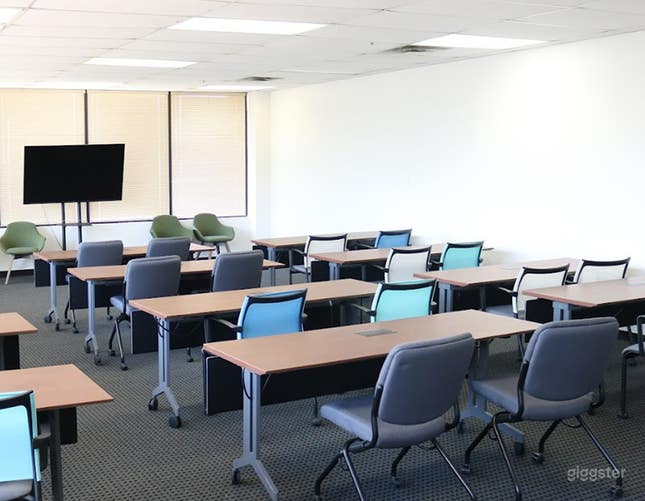
- 1Zone your classroom. Instead of rows or one big circle, create zones — a direct instruction area at the front, small group tables in the middle, and independent work corners near the walls. Students rotate through zones based on what they need at a given moment.
- 2Use a morning or entry routine religiously. The first 5 minutes set the tone. A warm-up task written on the board (or projected via Google Slides) means students are working the moment they walk in. You’re not herding 30 cats — they already know the drill.
- 3Visual anchors everywhere. Learning objectives on the board, a daily schedule posted by the door, classroom norms on the wall. When students can see the structure, they don’t need to ask you what’s happening every five minutes. That alone saves enormous time across 30 kids.
- 4Build a signal system. A raised hand means “I need help,” a specific card color means “I’m done and need extension work,” a thumbs-up means “I got it.” These non-verbal cues let you scan the room in seconds and know where everyone is — without stopping the lesson.
- 5Assign roles within student groups. If you’re doing group work, students should have defined jobs — facilitator, recorder, timekeeper, presenter. Otherwise, in a group of 4, you usually get 1 worker and 3 spectators.
Tech Tools That Actually Help With 30 Students
I’ve tried a lot of tools over the years. Some were genuinely transformative. Others were just more things to manage on top of everything else. Here are the ones that held up under real classroom pressure:
Google Classroom
Assignment distribution and collection at scale. No more chasing down 30 versions of the same worksheet.
Kahoot / Gimkit
Live formative assessment that tells you instantly who’s lost and who’s bored. Both at once.
ClassDojo
Behavior tracking and parent communication without phone calls. Especially useful for 30+ students with varying needs.
Nearpod
Interactive slides where every student responds in real time. You can literally see 30 answers appear on your screen simultaneously.
ClassroomScreen
A browser-based tool with a timer, noise meter, random name picker, and work symbols. Runs on your projector. Students self-regulate more.
MagicSchool AI
AI-assisted lesson planning, differentiation, and rubric generation. Saves hours of prep when you’re managing 30 different learning profiles.
One thing I’ll say upfront: don’t try to use all of these at once. Pick two or three, learn them deeply, and then add more. I made the mistake of trying to integrate four new platforms in the same semester and spent more time troubleshooting login issues than actually teaching.
Differentiating for 30 Different Brains
This is the part nobody prepares you for in teacher training. You don’t have one class of 30. You have 30 individual learners — different reading levels, different attention spans, different home situations, different learning styles — all sitting in the same room expecting you to meet them where they are.
The practical solution isn’t to write 30 different lesson plans. That’s fantasy. The real approach is tiered tasks.
Here’s how I do it: I create three versions of every core activity — a foundational version, a grade-level version, and an extension version. Color-coded (red, blue, green — never labeled “easy/medium/hard” because students notice and it stings). When I’m distributing materials, I hand them out based on what I know about each student from recent data, not from assumptions.
Heads up: Differentiation doesn’t mean doing more work. It means doing smarter work. If you’re killing yourself creating custom content for every student, you’re doing it the hard way. Templates, tiered questions, and flexible seating do most of the heavy lifting.
Common Mistakes Teachers Make With 30-Student Classrooms
Talking too much
Research consistently shows that teacher talk-time above 50% of the lesson is associated with lower student retention. If you’re lecturing for 40 of 60 minutes, 30 brains are drifting. Build in structured student talk, written response, and peer discussion every 10–15 minutes.
Cold-calling without safety
Nothing shuts down participation faster than a student being called on when they don’t know the answer — in front of 29 other people. Build a classroom culture where “I’m not sure, but I think…” is celebrated, not embarrassing. Think-pair-share before any open whole-class question helps enormously.
Treating transitions as dead time
Every transition — from direct instruction to group work, from one subject to the next — is a potential chaos point with 30 students. Time your transitions (ClassroomScreen’s timer is great for this), practice them explicitly, and treat a smooth 45-second transition as a genuine win worth celebrating.
Reactive behavior management
If you’re only addressing behavior when something goes wrong, you’re already behind. With 30 kids, proactive strategies — positive narration, proximity, predictable consequences prevent the situations that derail lessons. Reactive management is exhausting and scales terribly.
The Part Nobody Talks About: Your Own Capacity
Managing 30 students effectively isn’t just about classroom systems it’s about your own stamina, mental clarity, and planning habits. I’ve seen brilliant teachers burn out because they tried to give 100% individually to 30 kids simultaneously. That’s not sustainable and it’s not what great teaching looks like.
Great teaching at scale looks like:
- Weekly data reviews (10 minutes, not 2 hours) to see who’s falling behind
- Lesson templates you reuse and refine, not rebuild from scratch every week
- Systems that run themselves — so you can focus your energy where it matters most
- Honest conversations with yourself and admin about workload when class sizes creep past 32, 35, or more
There’s a reason class size reduction is one of the most well-supported interventions in educational research. Going from 30 to 24 isn’t just 6 fewer kids — it’s a qualitatively different teaching environment. Advocate for that if you can. And in the meantime, use every smart system available to make 30 feel more manageable.
A Day in the Life: What the 30x Approach Looks Like in Practice
Here’s a snapshot of how all this comes together in a single school day:
7:45 AM: Warm-up question already projected. Students walk in, sit down, start writing. I’m greeting at the door and scanning the room — who looks off today?
8:00 AM: 12 minutes of direct instruction. I’m not covering everything — I’m covering the one thing that unlocks the rest.
8:12 AM: Think-pair-share prompt. 30 students talking in pairs. I’m circulating, listening to 4–5 conversations, gathering data on misconceptions.
8:20 AM: Tiered independent/group practice. I pull a small group of 4 students who need reteaching. The rest are working — independently or in pairs — on tasks appropriate to their level.
8:45 AM: Exit ticket — one question, three answer choices, students hold it up or drop it in a bin. I know in 30 seconds who got it and who didn’t. That data shapes tomorrow’s lesson.
Is every day this smooth? Honestly, no. But on the days it works, it works because of systems, not magic.
If you’re working with a class of 30 and feeling overwhelmed, I want you to know: the overwhelm is rational. Thirty human beings in one room, each with their own needs, is genuinely hard. But it’s also one of the most rewarding things you can do professionally when you find your rhythm with it.
Start with one system. Get it working. Then add the next. The classroom 30x approach isn’t about doing everything perfectly — it’s about building a classroom where your effort scales, your students are genuinely engaged, and you leave at the end of the day feeling like a teacher, not a traffic cop.
That’s a classroom 30x worth showing up to.